
PARLIAMENT has established the ‘Committee for the Future’, a new cross-party body aimed at ensuring that decisions taken today do not undermine the well-being of generations to come.
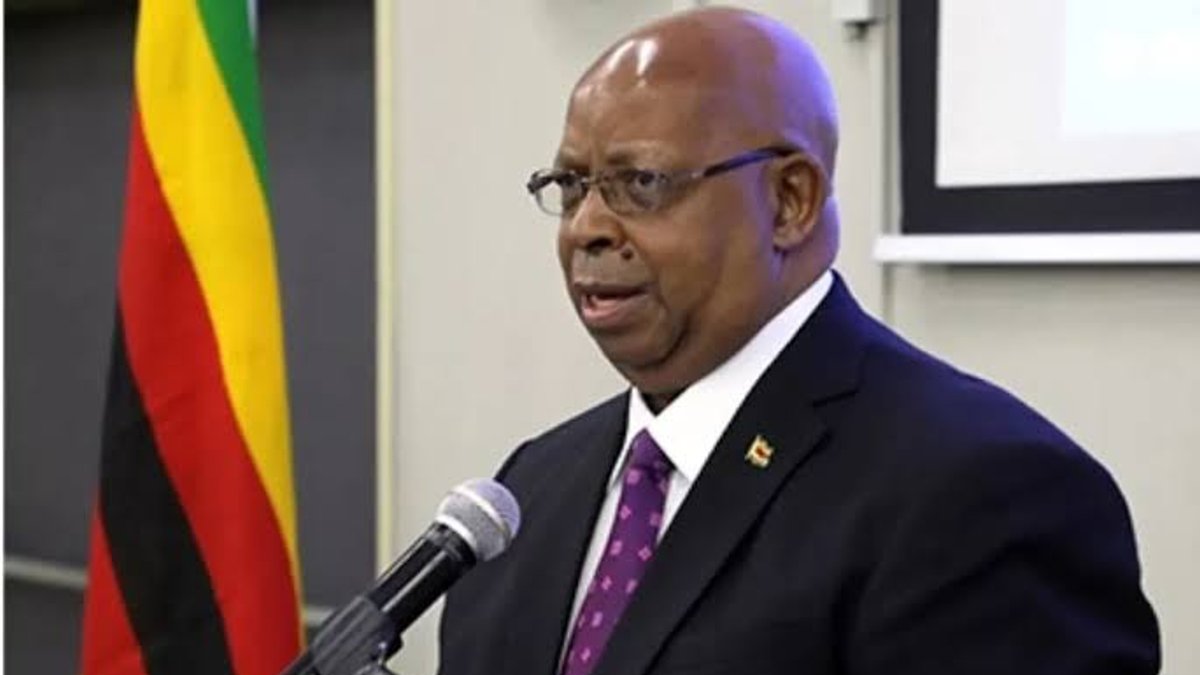
Speaker of the National Assembly Jacob Mudenda launched the Committee during plenary, describing it as a response to growing global challenges that extend beyond electoral cycles.
“We cannot keep governing in 5-year cycles while the challenges we face play out over 30 years,” Mudenda said.
The move comes amid increasing pressure on governments worldwide to address slow-burn crises such as climate change, public debt, demographic shifts, and rapid technological change.
Mudenda said the Committee for the Future is not a policy-making or budget-allocating body, but a foresight and advisory structure designed to act as an early-warning system inside the legislature.
Its role will be to spot risks and opportunities early, before they become crises.
The Committee will have three main functions: to produce biannual public reports that scan long-term trends in climate, technology, demographics, public health and the economy.
These reports will be tabled in Parliament and made available to the public.
The committee will also review all major draft legislation and national development plans through a "future lens" to assess intergenerational impact, fiscal sustainability and resilience. Finally, it will present Parliament and government with options that set out clear trade-offs and cost implications, rather than single "correct" answers.
Mudenda stressed that the Committee will not duplicate the work of existing sectoral committees. Instead, it will work alongside them and draw on research from universities and think tanks.
The 14-member body will be non-partisan, with balanced membership to prioritise evidence over party politics.
At least 20% of advisory seats have been reserved for citizens under 35 to ensure youth inclusion.
All hearings, submissions and reports will be published online, and the Committee will operate within existing parliamentary resources without creating new bureaucracy.
The Committee comprises 10 MPs and 4 experts from government and tertiary institutions.
Senate Deputy President Lt. Gen. (Rtd) Mike Nyambuya was named Committee chairperson, deputised by Sen. Nonhlanhla Mlotshwa.
Other members are: Sen. Mike Bimha, Priscilla Moyo, Maureen Kademaunga, Sen.Chief Ngungumbane, Darlington Chigumbu, Sen. Kucaca Phulu, Patience Zhou, Charles Moyo, Cichelesile Mahlangu Pumula MP, Tirivangani Magadza, a director of the Centre for Artificial Intelligence at HIT, Beaullar Chirume - secretary for Information, Communication, Technology, Postal and Courier Services ministry, Tarirayi Machiwenyika, acting director - Center for Educational Technologies Innovation and Design Bindura University of Science Education (BUSE) and Michael Musanzikwa from the Office of the President and Cabinet (OPC).
Civil society groups welcomed the launch, calling it “a rare institutional bet on the future.” The Committee is expected to hold its first meeting within 30 days and release its inaugural foresight report before the end of the year.